
Within a six-by-four rectangle of dirt, the past and the present coexist. The batter’s reality is contained and presented in 24 square feet, outlined in chalk. This particular story has chapters etched in 37 of such rectangular plots, dug into and raked over, watered, dragged, and redrawn, but never erased.
On Sunday, Paul Goldschmidt established himself in the batter’s box like he has throughout his career: firmly entrenched spikes supporting a wide base that allows him to pick up and go with no stride and very little pre-pitch movement. While his crouch and hand positioning have evolved over time, the very Jeff Bagwell nature of his setup remains the same.
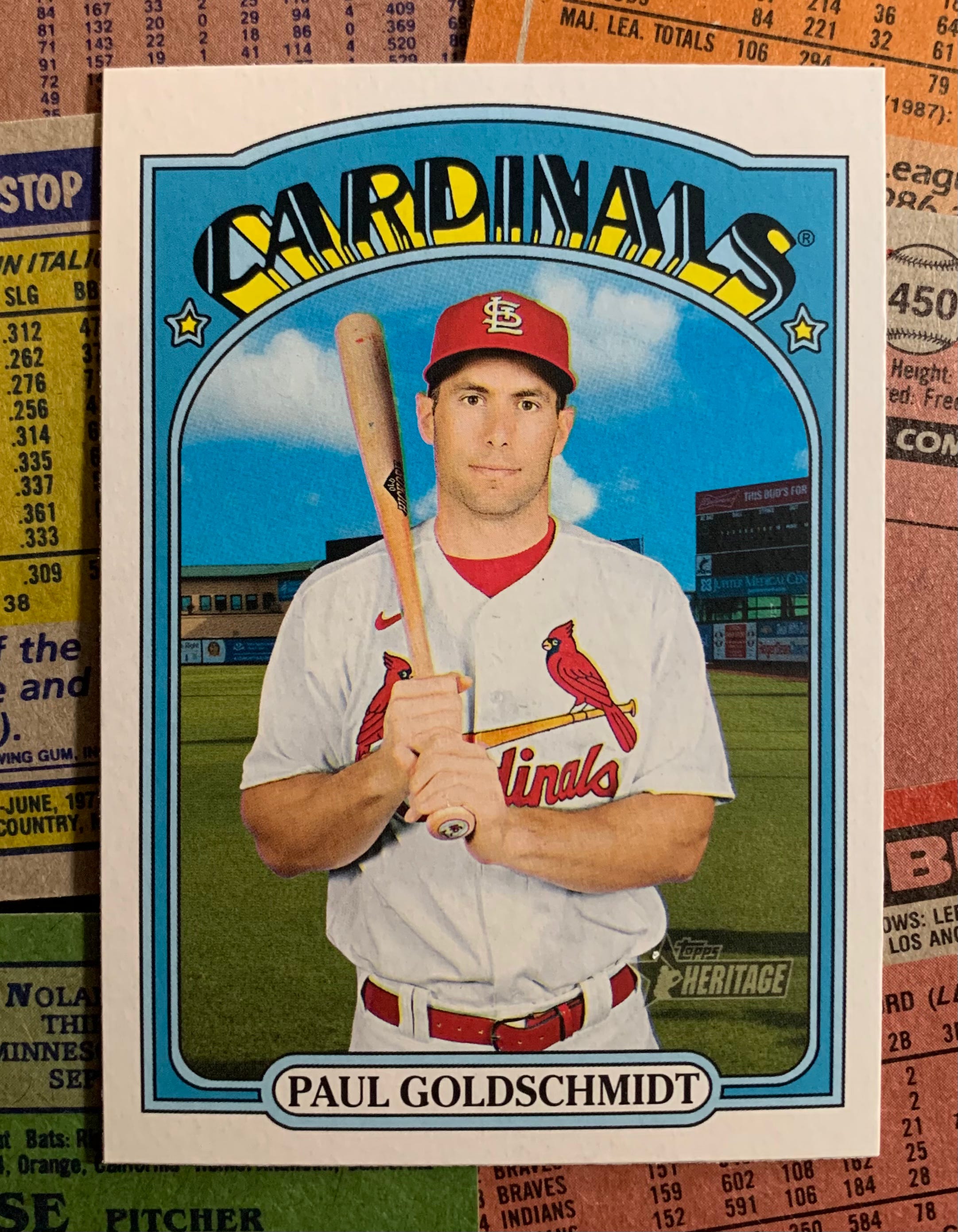
The count was 1-2 in the bottom of the seventh when Rays starter Drew Rasmussen turned over a 96 MPH sinker. The pitch dove below the knees as Goldschmidt’s bat, which has connected on 377 home runs, cut through the zone. In a career spanning 16 big league seasons and nearly 9,000 plate appearances, the player affectionately known as Goldy struck out for the 2,000th time.
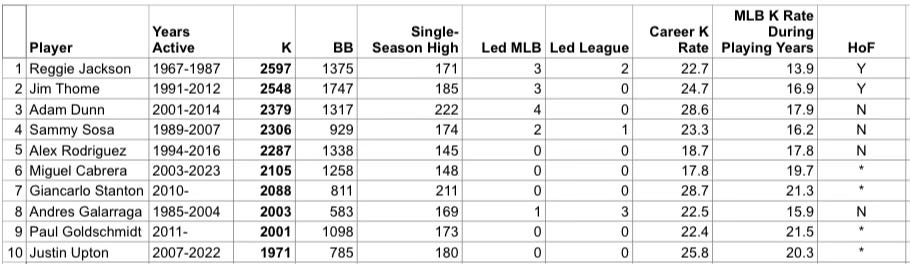
On that drizzly afternoon at Yankee Stadium, Goldschmidt walked back to the home dugout the ninth player in MLB history to strike out 2,000 times in a career. He joins a list that includes Hall of Famers, polarizing sluggers from the steroid era, three-true-outcome heroes, and a current teammate. (When Giancarlo Stanton returns from the Injured List, two members of the 2,000-K Club will be penciled into the same lineup for the first time ever.)
I had been surprised earlier in the season when I noticed Goldschmidt’s place historically. He had never struck me as an all-time strikeout victim because of the overall quality of his at-bats and his all-fields approach.
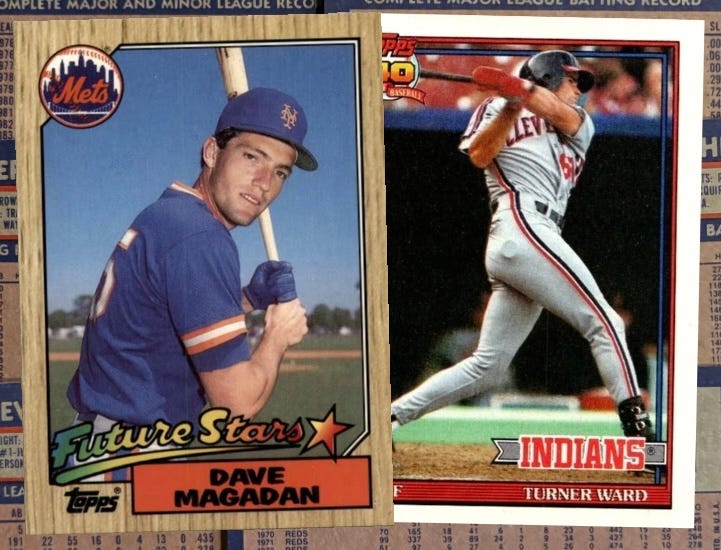
In the days leading up to the landmark swing and miss, I spoke to Turner Ward, Goldschmidt’s hitting coach for three years both in Arizona and in St. Louis. I was amused to find that Ward, too, was caught off guard by the slugger’s mounting total.
“When you play that long, you’re going to make outs,” Ward suggests before quickly pointing to the player’s ability to do damage in two-strike counts.
Behold these numbers:
In 2015, Goldschmidt finished second to Bryce Harper in the NL MVP vote.
That season, after falling behind in the count 0-2, all batters in MLB slashed .171 / .200 / .259. In the same situation, Goldschmidt posted .252 / .316 / .408.
But just wait; the MLB slash line in all counts that season was .254 / .317 / .405.
When Goldschmidt found himself down 0-2, he essentially represented a league-average hitter digging in for the first pitch of an at-bat. (Harper, in that scenario, went .245 / .284 / .555. Remarkable.) Hitting with two strikes is a lifestyle choice.
With all those two-strike counts, though, the strike threes accumulate. Goldschmidt has struck out in 37 ballparks. His conquests include every current MLB ballpark, including the A’s temporary home in Sacramento, plus Steinbrenner Field (where the Rays played in 2025), the Oakland Coliseum, Globe Life Park in Arlington, Turner Field, Estadio Monterrey (where the Cardinals and Reds played in 2019), London Stadium (where the Cardinals and Cubs played in 2023), and Rickwood Field (where the Cardinals and Giants played in 2024).
In 2023, while in London, Goldschmidt became the first player in MLB history to play a regular-season game in five different countries. But he’s only struck out in four. During the Diamondbacks two-game series in Sydney, Australia, in 2014, he went 4-for-9 with no strikeouts. Biscuits!
The road to 2,000 began with his big-league debut on August 1, 2011. After notching his first hit earlier in the game, Giants starter Matt Cain sent him down swinging.
“He’s a guy that hits with two strikes a lot,” says Dave Magadan, who was Goldschmidt’s hitting coach in Arizona from 2016-2018. “He’s a guy that sees a lot of pitches. He’s got a plan when he goes up to the plate — he’s looking for a pitch in a location — and he’s not afraid to [run deep counts]. When you’re hitting so much with two strikes and you’re a power guy like he is, you’re going to punch out. But I think he was and is so aware of the situation when he’s up that he does adapt. He will take his shot to right field — runner on third, less than two outs, he’s just trying to get a ball to the outfield.”
Magadan, who served as hitting coach for the Padres, Red Sox, Rangers, and Rockies, in addition to the D-backs, has a wealth of players and experiences to draw from.
“I used to talk about this with David Ortiz and Mike Lowell. A power guy that’s got two strikes on him with nobody on in a one-run game, I’m not really looking for him to hit a ground ball to the right side. I’m still wanting him to look to do some damage and, for that reason, a lot of these guys are going to punch out a little bit more.”
Ward was curious as to Goldschmidt’s strikeout rates in his seven full seasons in the desert versus his six seasons in St. Louis. While pitching was becoming more dynamic and strikeout rates have generally been on the rise, Goldschmidt’s K-rates increased only ever so slightly — and that was due to his offensively uncharacteristic 2024.
Like Magadan’s comments suggest, not all strikeouts are equal. For Goldschmidt, now 2,001 strikeouts into a career that includes an MVP (along with twice finishing second in the voting and once finishing third), five Silver Slugger awards, seven All-Star appearances, and four Gold Gloves, many of the Ks are a byproduct of understanding his strengths, adhering to a plan, and being patient when the situation allowed.
Ward attests, “He was relentless in his approach of what he was trying to do with certain pitchers,” which included a willingness to take strikes. “With his swing, he had to be really selective in what he was looking for to try to hit... and that goes back to the reason he’s so good — because he could look for certain areas and certain pitches, and do certain things.”
Reflecting upon an outstanding career still in progress, Ward asks: “Is he a Hall of Famer?”
To be continued…
What a cliffhanger! I feel like the answer is yes. I had no idea he would be a top 10 K guy in the history of the sport! I love the deep dive into why this may be the case. Can’t wait for the sequel!