
The Contemporary Baseball Era ballot was revealed earlier this week. You may have seen it already. The ballot contains a carefully curated group of eight players whose primary contributions to the game came after 1980.
I’m not here to break down the worthiness of the candidates. I’ve never felt compelled to debate the career of a player who hasn’t worn spikes in 25 years. The game has changed so much in just the last several years, we’re robbing ourselves of the magic of baseball if we rely too heavily on metrics that didn’t even exist when these players took the field. How did these guys make you feel when you watched them? How do you feel about them now, years later, when you see their highlights or hear their names? That’s what I hope we tap into.
The various era ballots acknowledge inherently that the traditional process for induction is imperfect. I’m happy that players get second chances. One day the fans will get what they want and Lou Whitaker will be enshrined. Not this year, though; Sweet Lou isn’t on the ballot. Nor is Keith Hernandez. But for good reason! Let’s navigate the inherent pitfalls and the need for — uh oh — a few victims and patsies.
This process is fascinating. First, the Hall of Fame’s Historical Overview Committee, appointed by the Baseball Writers Association of America, selects the finalists. The Historical Overview Committee, which puts the “HOC” in ad hoc, is made up of 11 veteran historians, five of whom are active HoF voters.
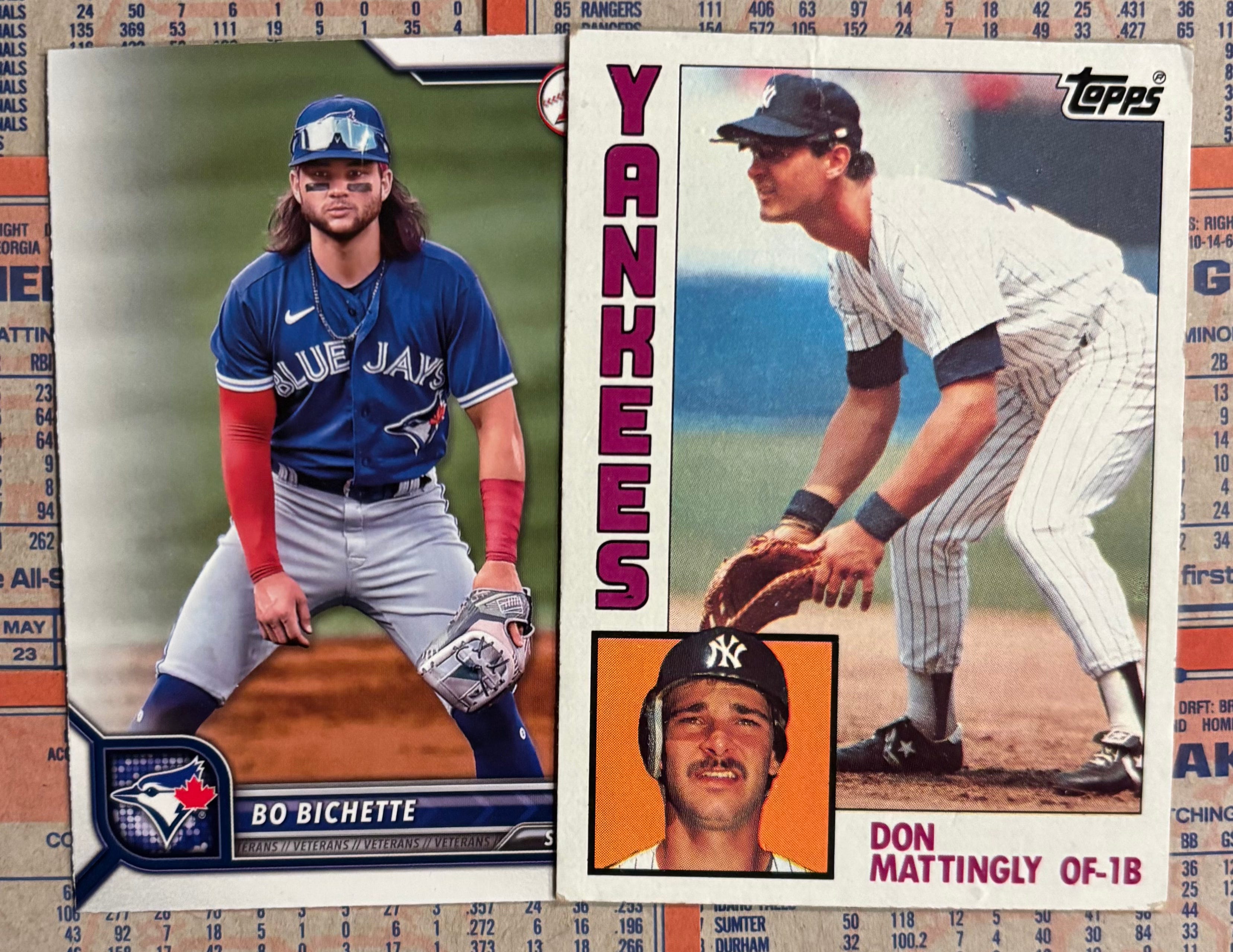
Then, one month from now at the Winter Meetings in Orlando, a 16-person group will vote on the eight candidates, conveniently listed here alphabetically: Barry Bonds, Roger Clemens, Carlos Delgado, Jeff Kent, Don Mattingly, Dale Murphy, Gary Sheffield, and Fernando Valenzuela.
Can you spot the legitimate candidates? Can you see the cannon fodder? Do you have a favorite?
There’s some basic math that places limitations on just how well the voting can go. Each of the 16 electors (yet to be named) — comprised of Hall of Famers, executives and veteran media members — can vote for as many as three candidates. To earn election, a candidate must receive 75% of the vote.
Very simply, with 16 voters casting up to three votes each, no more than 48 total votes will be placed. If those maximum votes are distributed evenly among four candidates, then all four of those candidates would enter the Hall. Not likely, though.
When the Contemporary Era Committee met three years ago, it voted in Fred McGriff unanimously. Mattingly received consideration on half of the ballots, falling four votes short of election. Murphy received six votes. Bonds, Clemens, Albert Belle, Rafael Palmeiro, and Curt Schilling all received fewer than four votes.
(The voters then were Hall of Famers Chipper Jones, Greg Maddux, Jack Morris, Ryne Sandberg, Frank Thomas, as well as two Hall of Famers who gained election via era committees: Lee Smith and Alan Trammell; major league executives Paul Beeston, Theo Epstein, Arte Moreno, Kim Ng, Dave St. Peter and Ken Williams; and veteran media members and historians Steve Hirdt, LaVelle Neal and Susan Slusser.)
The Hall of Fame could never admit it, but the best group of candidates doesn’t contain all of the best singular candidates. The worst thing the Historical Overview Committee could do is nominate the eight most worthy players. Why?
There are only so many votes to go around. We don’t want Mattingly, Murphy, Whitaker, Keith Hernandez, and Kenny Lofton fighting over the same three votes. For this year’s bunch, it seems hard to seriously consider the candidacies of Delgado, Kent, Sheffield, and Valenzuela.
I don’t want to be the one to deliver that news to Kent or Sheffield.
The Committee essentially borrows the plot of Spies Like Us. It deploys decoys to ensure the safety of the operation. Austin Millbarge and Emmett Fitz-Hume have no chance of enshrinement. (Glad I’m not sick.)
Adding to the tension, a new rule states that any candidate receiving less than five votes is ineligible from appearing on the ballot again when this era is next entertained in three years. Miss that threshold twice and — poof! — forever ineligible for future consideration. Harsh? I’ll leave that up to you, but it places greater meaning on the results of four of this year’s candidates.
We’ve got a tag-team match between the greatest pair associated with the steroid era — Bonds and Clemens — and two of the best players from the ’80s not in the Hall — Mattingly and Murphy. Is this vote a referendum on all players from the steroid era? I think it will be.
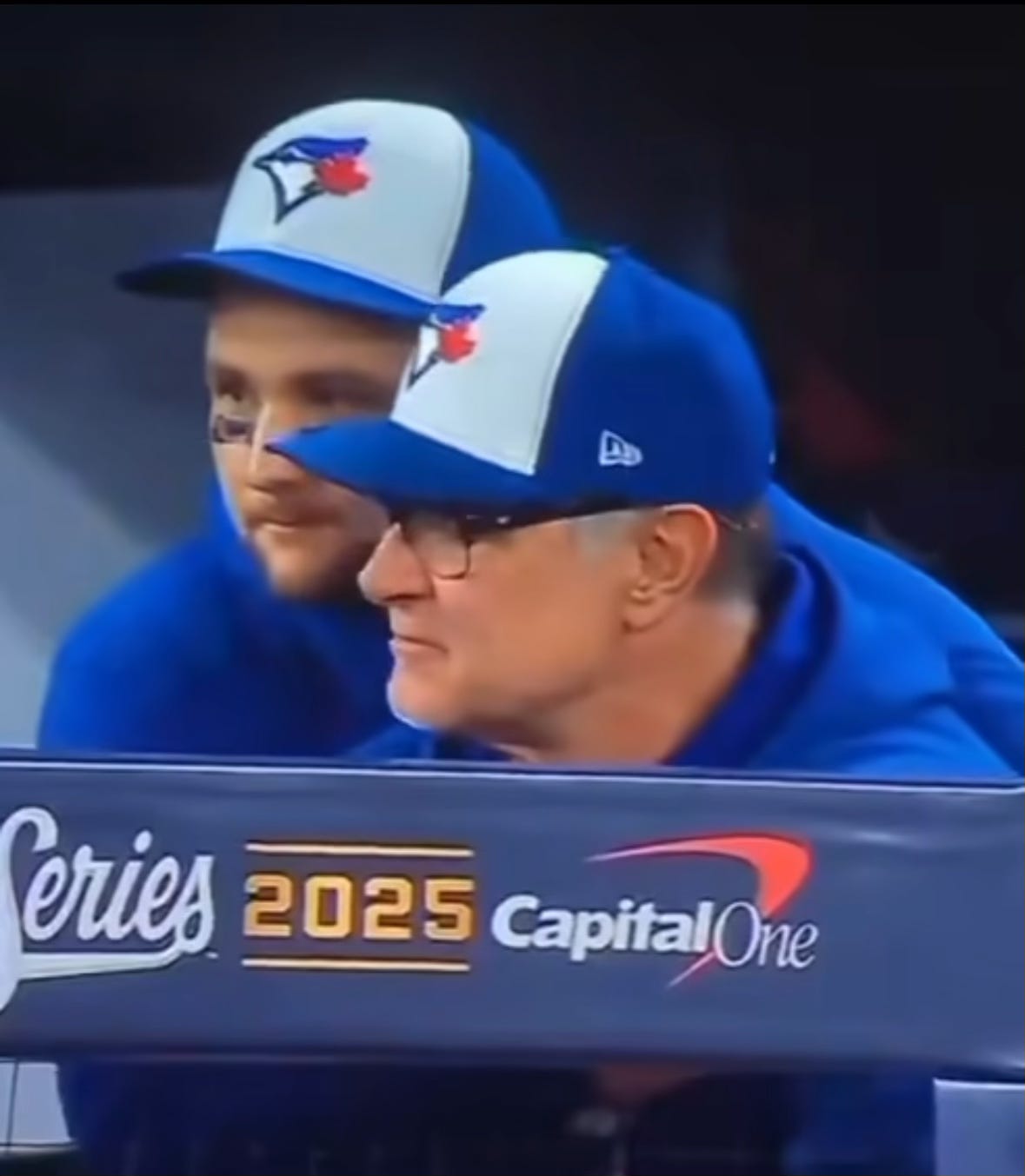
Induction to the Hall would not exactly be a consolation prize for losing Game 7 of the World Series, but Donnie Baseball was a sentimental storyline throughout the postseason. The Blue Jays’ performance reignited their bench coach’s candidacy. My feeling is that the image of Bo Bichette consoling a desolate Mattingly in the aftermath of the Dodgers’ championship will provide the boost to propel the Yankees’ legend to Cooperstown.
Unrelated to his candidacy but essential to his character, there’s this 90-second clip of Mattingly on the Dan Patrick Show, recorded during an off day before the World Series. I’ve watched it a few times already. It’s perspective on life and family that I wish I had heard when I was leaving baseball. It’s wisdom from a man who was a daily presence — in poster form — in my childhood bedroom.
I hope Don Mattingly gets those 12 votes. And then I hope he joins his son, Preston, in Philadelphia.
Hard to love a Yankee, but Mattingly was special. I hope he gets into the HOF. Thanks for explaining all this veterans committee stuff, Ryan!