
I think about Anthony Banda a lot. Probably not as much as Dave Roberts thinks about Anthony Banda these days, but much more than I ever thought I would.
Banda easily could have become one of the thousands who slips into baseball obscurity, a big leaguer who goes largely unrecognized through daily life. The Dodgers rescued Banda from anonymity. Now I think about him more than ever.
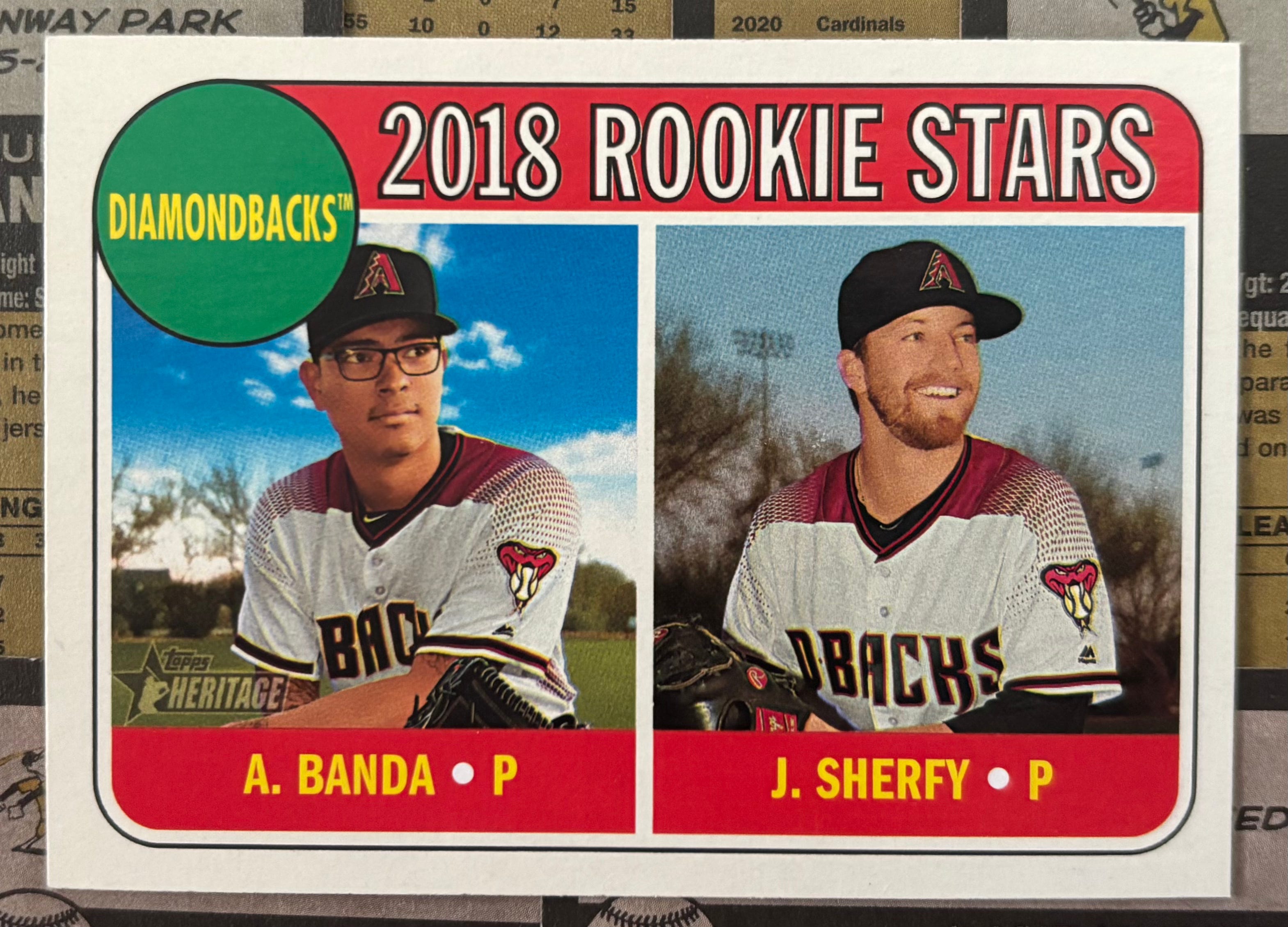
Consider my relief when I recently learned that I’m not alone. Thank you, Mike Brown.
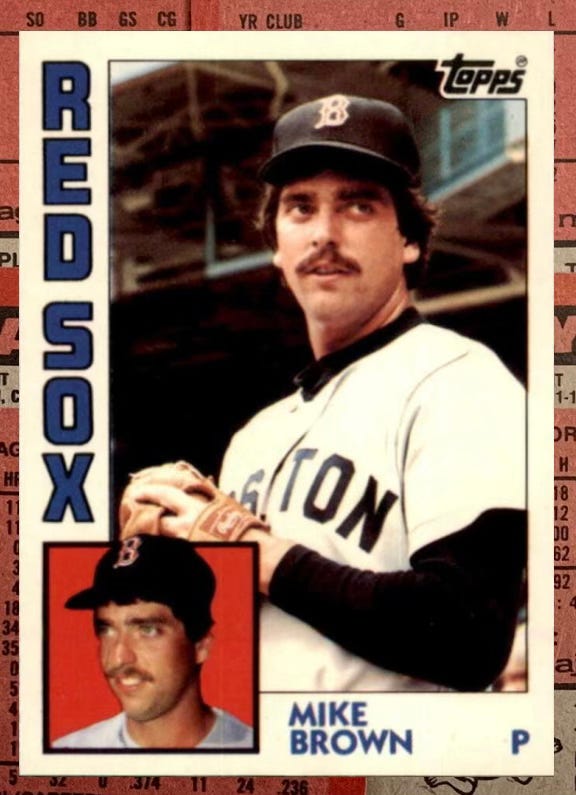
Brown is a baseball lifer. A second-round pick by the Red Sox out of Clemson in 1980, Brownie debuted with Boston in 1982, picking up his first win on the final day of the season with four innings of shutout relief in an extra-inning affair at Yankee Stadium. (Oil Can Boyd allowed a game-tying homer before Brown entered.)
After his playing days ended, Brown worked as a pitching coach in the Cleveland organization, including a stint on the Major League staff in 2002. From there, he went to Japan, where he was the pitching coach of the Hokkaido Nippon-Ham Fighters from 2004-2006. Among his arms, a young Yu Darvish.
“Darvish and Felix [Hernandez] were the most talented 19-year-old pitchers in the world at the time,” Brown remembers.
Brown found his way back to the US, where he began a long run as a trusted pro and international scout for the Diamondbacks. That’s where he and I met.
In 2014, things didn’t go so well at the big-league level for the D-backs. We were in sell mode by the first of July. Though the season itself was rather unpleasant, the team’s performance eliminated all reason for hope and afforded us extra time to dig in on potential trade returns.
Kevin Towers began fielding calls from teams interested in active Diamondbacks players in mid-June. In early July, Doug Melvin, then GM of the Brewers, expressed interest in outfielder Gerardo Parra. KT and Melvin had been friends and peers for decades at that point. The two men respected and trusted each other; both were interested in a fair baseball trade.
At Chase Field, we had plenty of time to evaluate a handful of Brewers prospects who were under consideration in a Parra deal. In addition to the traditional scouting coverage throughout the season, we sent Mike Brown — one of our go-to scouts when it came to pitchers — to see some of Milwaukee’s young arms. In Appleton, Wisconsin, home of the Timber Rattlers, there was left-handed pitcher Anthony Banda.
Banda was not a complete stranger to the D-backs organization. In the 2011 Draft, he was selected in the 33rd round by Arizona. The pitcher chose to forgo pro ball and enrolled at San Jacinto, a junior college with a strong baseball program in Houston. Banda ultimately signed with the Brewers after they selected him in the 10th round the following year.
As Brown and I were reminiscing about the Banda acquisition, he recalled scouting the young pitcher, then a starter: “We all love left-handers, right?” Brown chuckled, remembering how KT, half-jokingly, had said: “No more right-handed pitchers!”
While scouting Banda in the Midwest League, Brownie saw a soon-to-be 21-year-old pitcher, whose fastball ranged from 89-92, with a good feel for his changeup. He could throw strikes and change speeds. His arm action was long, which increases the likelihood of timing issues that affect control, and his breaking ball was still “iffy,” but Brown saw enough to believe Banda was worth taking a flyer on.
On July 31, 2014, the Brewers received Parra in exchange for Banda and outfield prospect Mitch Haniger. The trade represented the efforts of an entire baseball operations department; it included the work of several scouts and coaches along the way. The outcome, especially the evolution of Haniger as a player as he made adjustments to his hitting mechanics, surprised — and continues to surprise — everyone.
Banda debuted for the D-backs in 2017, posting a forgettable 5.96 ERA over 25.2 innings. The next offseason, he was shipped to Tampa Bay in a three-team deal. For seven years, Banda’s time in the big leagues was interrupted by options, trades, outright assignments, Tommy John surgery, and pneumonia.
All in all, he was designated for assignment six times by six different teams, including the Blue Jays. He didn’t shed his rookie status until 2020, and he became arbitration eligible for the first time this past winter (he signed a one-year deal worth $1 million).
When Banda put on a Guardians uniform in Spring Training of 2024, it marked the 11th different organization he had suited up for. A couple months later, Cleveland traded Banda to the Dodgers. That brings us to today.
For the past two years, I’ve marveled as I have watched Banda bail the Dodgers out of all kinds of trouble. The Dodgers dropped his arm angle and largely eliminated the once-promising changeup from his repertoire. This year, he’s relied on his slider nearly half the time. Meanwhile his fastball averages 96 MPH.
From his home in Florida, Brown has been watching. Turns out we’ve both been subjecting our wives to the same commentary: “That’s Banda… throwing in the back end of the Dodgers bullpen… touching 97, 98. This is ridiculous!”
The game has evolved during Banda’s career. As pitchers become more conditioned to throw harder in shorter bursts, Banda has seized the moment. He’s taken some lumps during the World Series, allowing six runs (including two home runs) in three innings of work. But, in Game 7, none of that matters.
Conveniently enough, Brown was scouting in Japan when a young Shohei Ohtani was on the mound for the Fighters. He remembers 40 scouts in attendance. When someone asked why he didn’t have his radar gun out, Brown’s answer was simple: “He’s the best pitcher I’ve seen in my lifetime.”
The World Series was tied at two games when Brownie and I spoke. As our conversation shifted from Banda to Ohtani, perhaps while gazing into a crystal ball, he concluded: “If you’re looking for someone to throw a shutout in Game Seven of the World Series, he’s your guy.”